The world is changing quickly, and transportation is evolving along with it. Electric bicycles have become one of the most practical and eco-friendly solutions for daily commuting, especially in busy cities and crowded urban areas. At the same time, schools and educational institutions are introducing innovative science projects to help students understand how modern technology works. These two trends are closely connected because electric mobility is now becoming a major part of science education.
Today, students, hobbyists, and even technology enthusiasts are exploring how electric motors function inside bicycles and small vehicles. Learning about battery systems, wiring, energy transfer, and motion has become more exciting than ever before. This is where projects and practical learning kits play a huge role.
Why Electric Bicycle Technology Is Gaining Attention
Electric bicycles are no longer considered luxury gadgets. They are now practical transportation tools used by students, office workers, delivery services, and fitness enthusiasts. The biggest reason behind their popularity is convenience. Riders can travel longer distances without getting exhausted, while still enjoying the benefits of cycling.
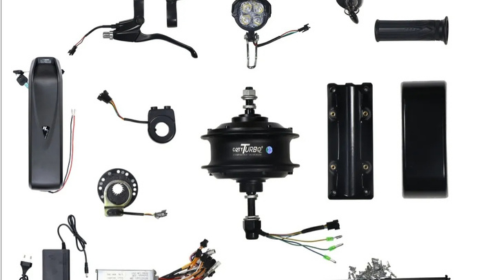
A modern electric motor for bicycle setup usually includes a motor, rechargeable battery, controller, and throttle system. These components work together to provide smooth movement and better riding efficiency. Many people now convert traditional bicycles into electric ones because it is affordable and environmentally friendly.
Another important factor is fuel savings. Rising petrol and diesel prices have pushed people toward electric alternatives. Electric bicycles consume very little electricity compared to motorcycles or cars, making them highly cost-effective over time.
The Role of Science Education in Electric Mobility
Science education is becoming more practical and interactive. Instead of only reading theories from textbooks, students now prefer experiments and hands-on learning. Educational kits designed around electric circuits and motors help students understand real-world engineering concepts.
A well-designed science project can teach students about:
- Electrical current and voltage
- Motor mechanics
- Battery charging systems
- Energy conversion
- Motion and speed control
- Sustainable technology
These concepts are easier to understand when students physically assemble and test small working models.
How Educational Kits Improve Technical Skills
Modern learning methods encourage creativity and experimentation. Students who work on electrical and mechanical projects often develop problem-solving abilities much faster. Educational kits are especially useful because they simplify complex engineering concepts into manageable steps.
A quality science electric kit can help students build mini projects using wires, motors, switches, batteries, and small controllers. These kits are commonly used in schools, robotics labs, and home learning environments. They allow learners to gain practical exposure to technology at an early age.
Such kits also inspire innovation. Many young students who start with simple science projects later become engineers, developers, or inventors. Hands-on experience often creates stronger interest compared to traditional classroom teaching alone.
Environmental Benefits of Electric Transportation
One of the biggest advantages of electric bicycles is their environmental impact. Traditional fuel-powered vehicles release harmful emissions into the atmosphere. Electric bicycles, on the other hand, produce significantly less pollution.
Governments around the world are encouraging electric mobility to reduce carbon emissions and traffic congestion. Electric bicycles require less parking space, generate less noise, and consume less energy compared to larger vehicles.
When students learn about these technologies through science projects, they also become more aware of environmental responsibility. This combination of education and sustainability is extremely valuable for the future generation.
The Future of Bicycle Technology
Technology continues to improve rapidly. New electric bicycle systems are becoming lighter, smarter, and more efficient. Some modern models now include smartphone connectivity, regenerative braking, GPS tracking, and advanced battery management systems.
As innovation grows, educational institutions are also updating their science programs to include renewable energy and electric mobility concepts. Students are increasingly encouraged to explore robotics, automation, and sustainable transportation projects.
Electric bicycles may soon become one of the most common transportation methods in urban areas. At the same time, science learning kits will continue helping students understand the engineering principles behind these innovations.
Final Thoughts
Electric bicycle technology represents the perfect combination of convenience, sustainability, and innovation. It is not only changing transportation but also influencing modern education. Students who learn through practical science projects gain valuable technical knowledge that can help them in future careers.
Educational experiments involving motors, batteries, and circuits make science more engaging and easier to understand. As electric transportation becomes more popular worldwide, the connection between technology and education will continue to grow stronger.