

There’s something oddly personal about water.
It’s the first thing you reach for in the morning. It’s what fills your coffee pot, your pasta pot, your dog’s bowl. It runs through your life quietly, without asking for attention — until it tastes a little off. Or smells faintly chemical. Or leaves you wondering what’s actually in it.
For a lot of homeowners, that curiosity turns into research. And that research often leads to one phrase popping up again and again: reverse osmosis water systems.
But what are they really? And do they live up to the reputation?
Let’s talk about it — not like a sales brochure, but like a real conversation.
The Question Behind the Question
When people ask about water purification, what they’re usually asking is this: Can I trust what’s coming out of my tap?
Municipal water is treated. That’s true. It meets regulatory standards. But “meets standards” and “feels reassuring” aren’t always the same thing. There can still be trace minerals, residual disinfectants, or environmental contaminants present in small amounts.
If you’re on well water, the question becomes even more specific. What’s in the groundwater beneath your home? Iron? Nitrates? Bacteria? Sediment?
This is where drinking water purification stops being abstract and becomes very real. It’s not about fear. It’s about clarity — literally and figuratively.
What Reverse Osmosis Actually Does
At its core, reverse osmosis (often shortened to RO) is a filtration process that pushes water through a semi-permeable membrane. That membrane is designed to allow water molecules to pass through while blocking many dissolved solids and contaminants.
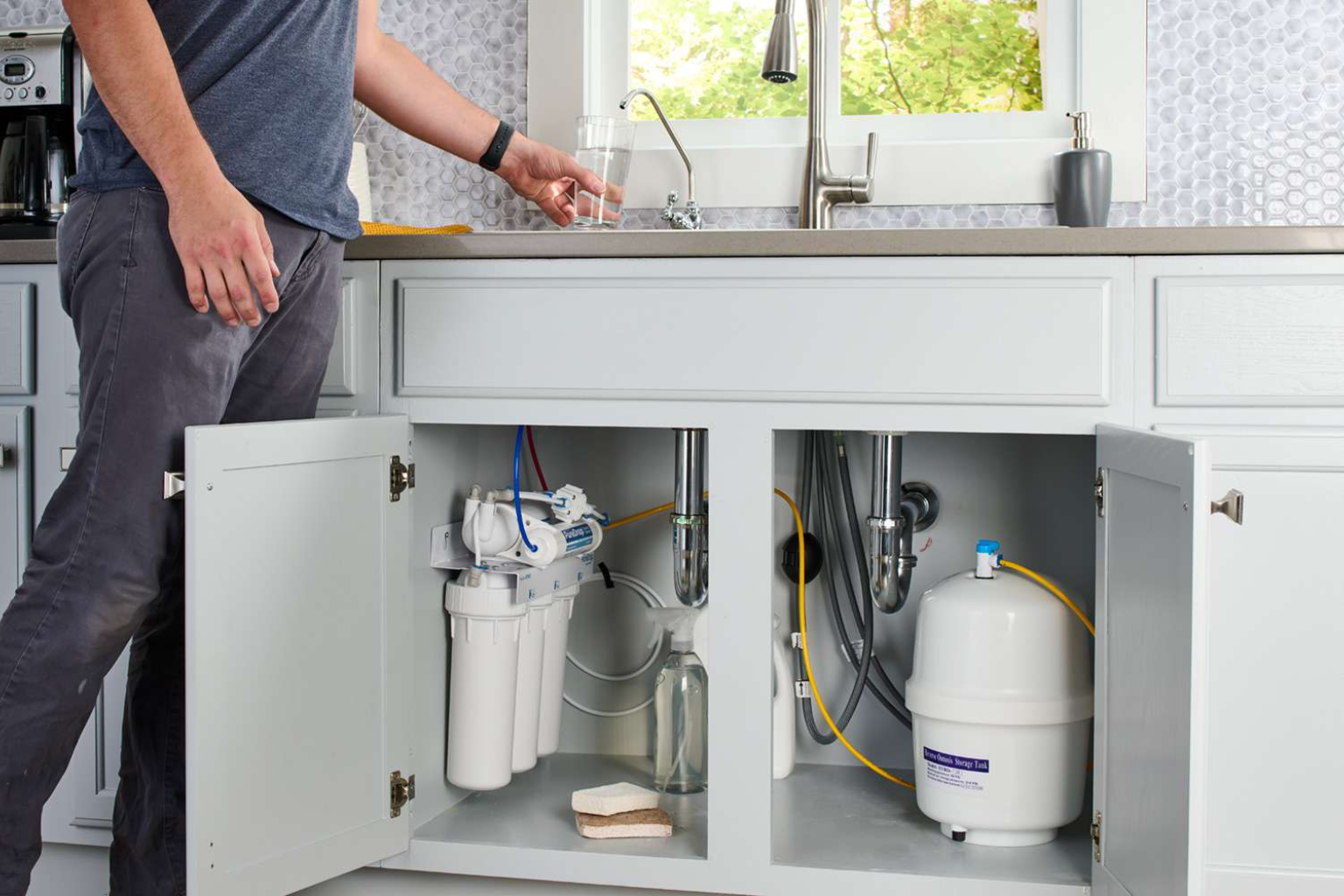
The system typically includes multiple stages — sediment filters, carbon filters, and finally the membrane itself. Each stage has a job.
Sediment filters catch visible particles. Carbon filters reduce chlorine and improve taste. The membrane handles the heavy lifting, targeting dissolved substances that standard filters might miss.
The result is water that’s noticeably cleaner — in taste, smell, and composition.
It’s not magic. It’s physics and pressure working together.
Why Taste Is Often the First Sign
Ask anyone who’s installed an RO unit, and they’ll usually say the same thing: “The water just tastes different.”
That difference comes from effective contaminant reduction. When dissolved solids, chlorine, and other compounds are filtered out, the flavor becomes lighter, almost crisp.
It’s subtle. But once you notice it, it’s hard to un-notice.
Coffee tastes smoother. Ice cubes are clearer. Even plain water feels more refreshing — which might sound dramatic, but it’s surprisingly common feedback.
And if something encourages you to drink more water? That’s not a bad side effect.
What It Doesn’t Do
Let’s keep this honest.
Reverse osmosis systems are incredibly effective, but they aren’t designed to treat every water issue throughout your entire home. Most units are installed under the kitchen sink and supply a dedicated drinking faucet.
They’re not a replacement for whole-home filtration if you’re dealing with hard water, scale buildup, or sediment affecting showers and appliances.
Think of RO as focused purification — designed specifically for the water you drink and cook with.
And that focus is part of what makes it efficient.
Is It Worth It?
That depends on your starting point.
If your municipal water tastes fine and testing shows minimal dissolved solids, you might not feel a dramatic need. But if you notice persistent chlorine flavor, elevated TDS (total dissolved solids), or specific contaminants in testing reports, an RO system becomes a logical step.
For well water users, it can be even more compelling. Groundwater varies widely by region, and a targeted purification system can add a layer of confidence that’s hard to put a price on.
The real value often lies in peace of mind.
Maintenance and Real-Life Use
RO systems do require upkeep. Filters need replacing. Membranes have a lifespan. Most homeowners change pre-filters every six to twelve months and membranes every few years.
It’s manageable, but it’s not zero-maintenance.
Modern systems are more efficient than older models, wasting less water during filtration. Storage tanks ensure you’re not waiting around for a glass to fill.
In daily life, once installed, it becomes almost invisible. You turn the small faucet. You fill your glass. You move on with your day.
And that simplicity is part of the appeal.
A Small System with a Big Impact
There’s something grounding about knowing your drinking water has passed through multiple layers of filtration right inside your home.
You’re not relying solely on distant treatment facilities. You’re adding an extra step of control.
For families with children, that reassurance matters. For health-conscious individuals, it aligns with broader lifestyle choices. For others, it’s simply about preference — wanting water that tastes clean and neutral.
It’s not about paranoia. It’s about intention.
The Bigger Picture
Water flows through our routines so seamlessly that we rarely pause to think about it.
But when you step back, it’s central to everything — hydration, cooking, cleaning, wellness.
Choosing a purification method like reverse osmosis isn’t about chasing perfection. It’s about refining something you use every day.
And sometimes, refining the basics makes the biggest difference.
Final Thoughts
If you’ve ever wondered whether your tap water could be just a little better — clearer, cleaner, more reassuring — you’re not alone.
Reverse osmosis systems offer a practical, well-established approach to improving drinking water quality. They focus on removing what you don’t want while leaving you with water that tastes simple and clean.