

I stayed at my sister’s place for a week last summer, and by day three I’d noticed something strange — my hair felt different. Not in a bad way, just… different. Lighter, easier to manage, less like straw. I actually asked her what shampoo she used before realizing, no, it wasn’t the shampoo at all. It was her water. And that one week accidentally sent me down a rabbit hole I hadn’t planned on going down.
Turns out my sister had gotten a softening system installed a few months earlier after getting fed up with the same stuff I’d been dealing with at my own place — dry skin, dull hair, dishes that never quite looked clean no matter how much soap she used. I’d been living with hard water so long I forgot it wasn’t supposed to feel that way.
What Soft Water Actually Feels Like, In Case You Forgot Too
Here’s the thing nobody really tells you — soft water doesn’t just prevent scale buildup in your pipes, though that’s the part everyone focuses on. It genuinely changes how everything feels day to day. Soap lathers properly instead of fighting you. Your skin doesn’t get that tight, dry sensation after a shower. Clothes come out of the wash actually soft instead of slightly stiff and faded-looking, which, honestly, I’d chalked up to just how laundry was supposed to be for years.
The mechanism behind it is pretty simple once you understand it — hard water carries dissolved calcium and magnesium, and a softener swaps those out for sodium through an ion exchange process. It’s not glamorous science, but the day-to-day difference it makes is honestly a little wild once you experience it firsthand instead of just reading about it.
But My Sister Didn’t Stop There, Apparently
While I was poking around her utility closet asking way too many questions, she mentioned she’d also put in a system under her kitchen sink specifically for drinking water. Different problem entirely, she explained, since softening handles hardness but doesn’t really touch what’s actually in the water beyond minerals — chlorine taste, sediment, whatever contaminants might be lingering depending on your local supply.
That’s where her setup for purified drinking water came in, a separate system dedicated to just the one tap she and her kids actually drink from. She poured me a glass straight from it, and yeah, I could tell the difference immediately — cleaner, no chlorine aftertaste, none of that faint mineral edge I hadn’t even realized my own tap water had until I tasted water without it. It’s a strange thing, noticing an absence like that. You don’t know something’s off until it’s gone.
The Part That Actually Made Me Go Home and Do Research
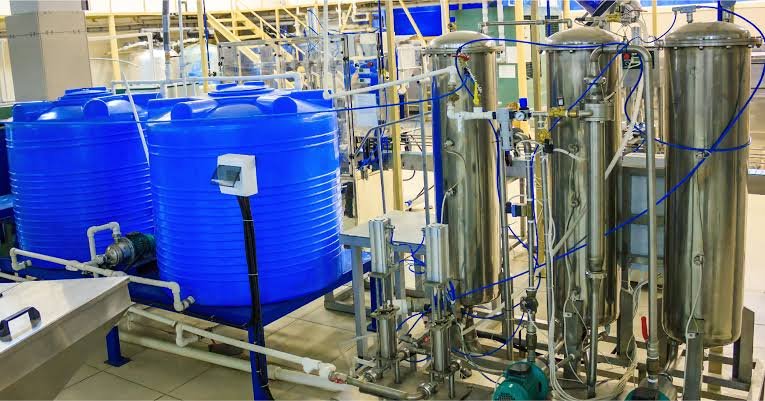
What got me thinking harder, though, was her explaining how the whole thing worked together instead of as separate random purchases. Rather than a scattered mess of pitcher filters and shower attachments — which, guilty, was exactly my approach for years — she’d gone with more comprehensive, efficient filtration systems built to handle her whole house’s water needs from one central point instead of piecemeal fixes scattered around different rooms.
She made a comment that stuck with me, something like “I got tired of babysitting five different filters.” Fair point. I currently own two pitcher filters, a fridge filter I forget to replace, and a shower head attachment I’m honestly not sure is even doing anything anymore. Compared to her single, properly maintained system, my setup suddenly looked pretty ridiculous.
What I Actually Did After That Trip
I came home and finally got my water tested, something I’d been putting off for embarrassingly long. Turned out my water was harder than I’d realized, plus a few other minor issues that explained the taste I’d apparently just gotten used to ignoring. I’m still in the process of figuring out my exact setup, comparing a few companies, trying not to get talked into more than I actually need. But I’m getting there.
It’s funny how something as small as noticing your hair feels different at your sister’s house can send you down this whole path of reevaluating stuff you’d just accepted as normal for years. I’d stopped noticing my own water was a problem because I’d never known anything else. Sometimes you need that outside comparison — someone else’s shower, someone else’s glass of water — to realize what you’ve been missing.
If you’ve got a place you visit regularly where the water just feels better, pay attention to that. It’s not your imagination, and it’s probably not just the soap. Get your own water tested, figure out what’s actually going on, and stop accepting dry skin and stiff towels as just a fact of life. It doesn’t have to be. My sister figured that out before I did, and I’m mildly annoyed it took me this long to catch up.